Your cart is currently empty!
CLIMATE, ENVIRONMENT, AND NATURAL RESOURCE, Sector working group Meeting
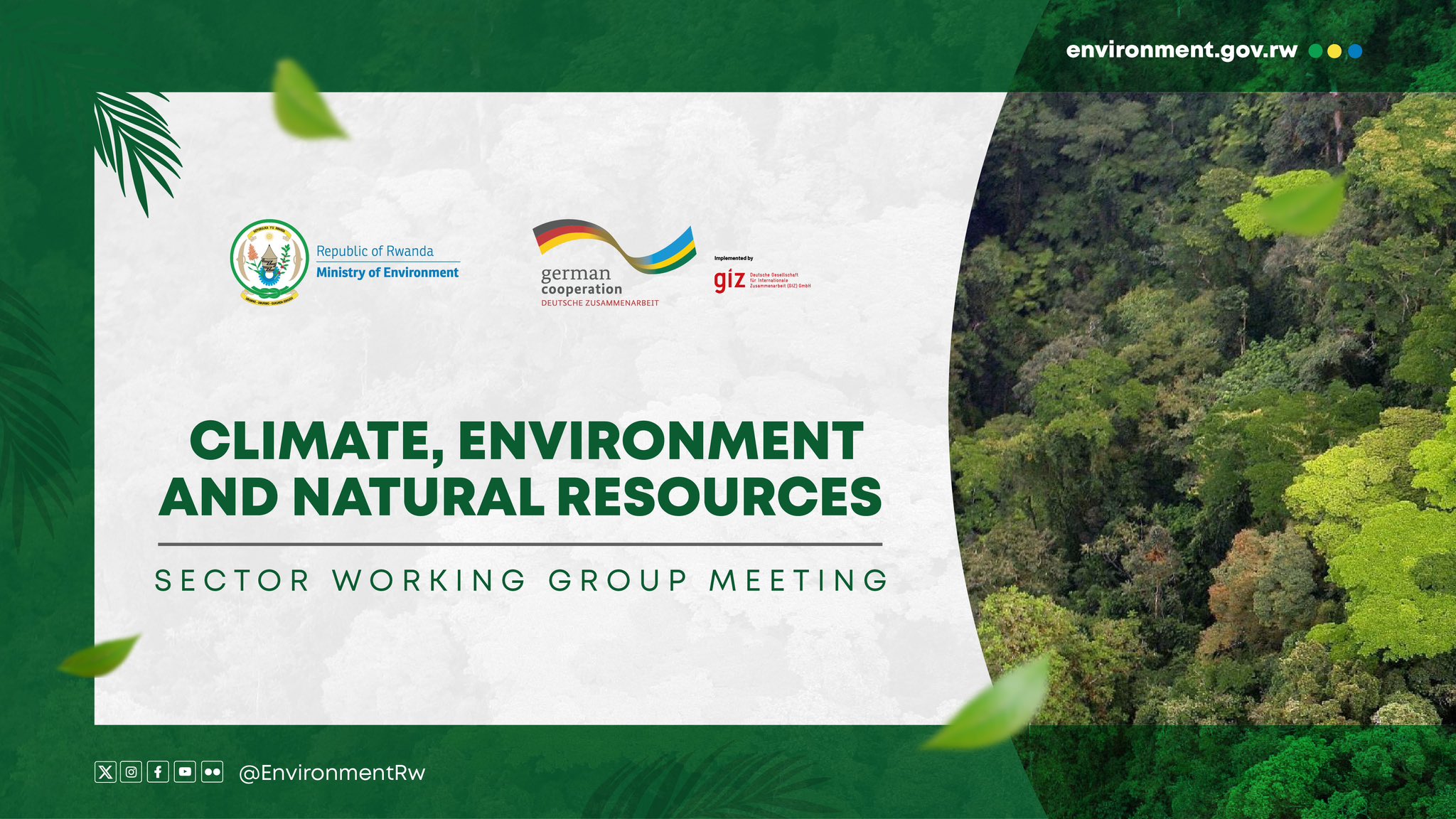
CLIMATE, ENVIRONMENT, AND NATURAL RESOURCE, Sector working group Meeting
Kigali, October 1, 2025 — The Rwanda Environment Awareness Organization (REAO) joined
national and international partners at the Climate, Environment and Natural Resources (CENR)
Sector Working Group meeting held on Tuesday, September 30, 2025, at Ubumwe Grande Hotel,
Kigali.
Convened by the Ministry of Environment, the high-level dialogue gathered government
institutions, development partners, and civil society organizations to review progress on
Rwanda’s climate and environment priorities and set direction for FY 2026/27.
Scaling Local Solutions to National Impact
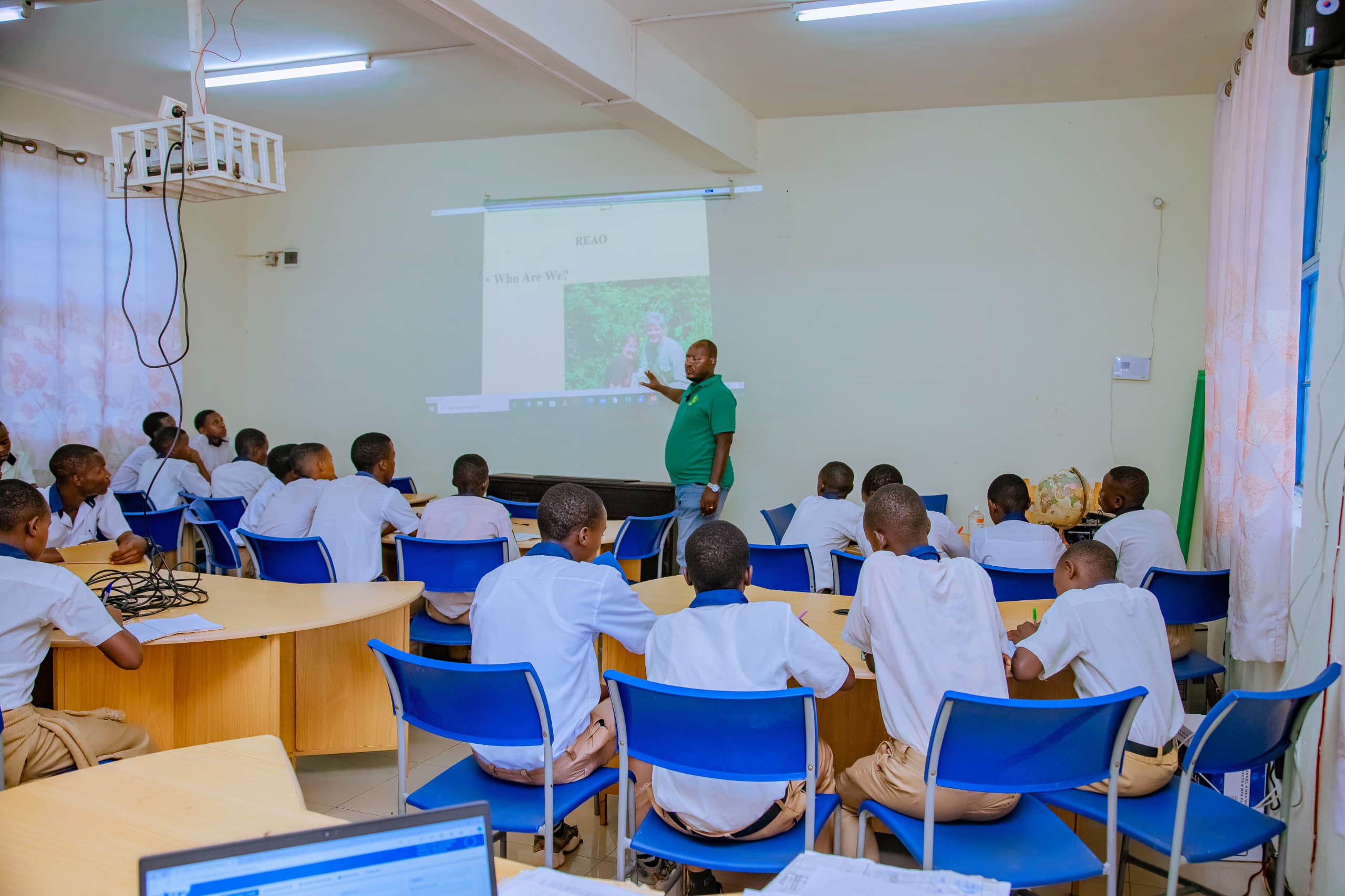
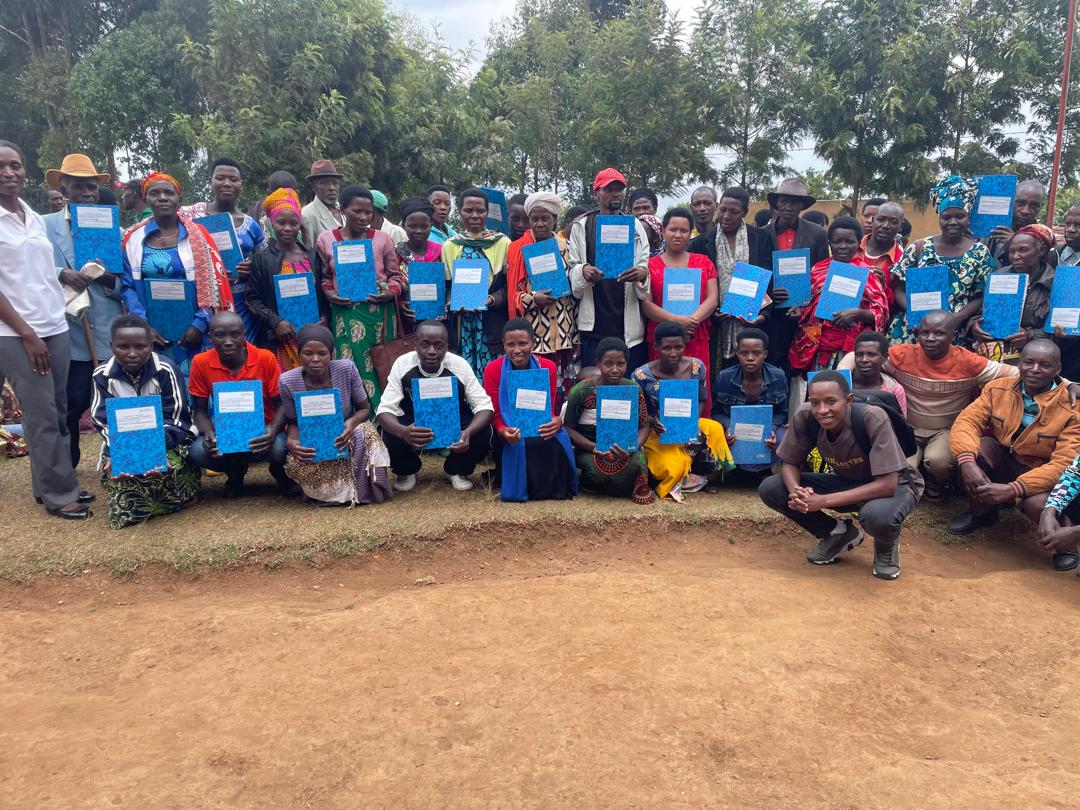
REAO’s community-based model — combining agroforestry, youth environmental education, and
climate-smart livelihoods — demonstrates how civil society can help achieve the National
Strategy for Transformation (NST2) and Vision 2050 goals.
Working closely with partners such as REMA, FONERWA, and IREME Invest, REAO is
championing low-cost, verifiable pilot projects that attract green investment and ensure no
community is left behind in the climate transi

that connects projects and interventions across thematic areas, sectors, and stakeholders for greater impact.
The meeting reviewed FY2024/25 progress under NST2/CENR SSP
Key achievements & hard numbers
- Clean air/vehicle emissions testing: The national #CleanAirCampaign vehicle emission
- testing service was launched on 25 August 2025; implementing partners at the SWG
- reported >8,000 vehicles tested since launch
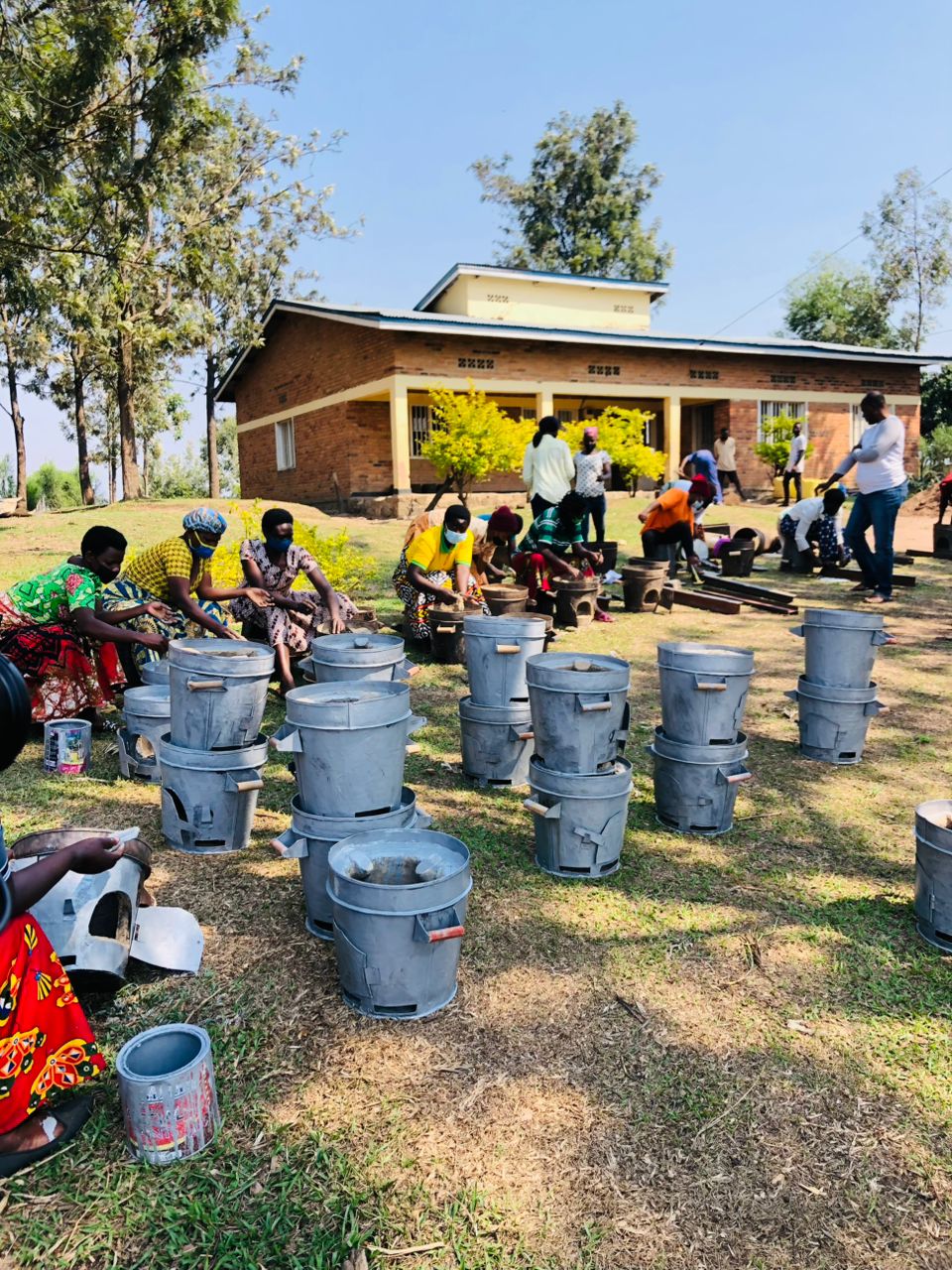
- Clean cooking scale-up: 243,620 Improved Cook Stoves (ICS) distributed nationally during
- the reporting period — a clear supply-side push toward cleaner household energy.
- 344,604 ha restored/maintained for high-risk soils
- 692,838 ha of agroforestry trees planted/maintained (progress >100% vs target).
- 2,242,178 fruit trees planted.
- Forest management & nursery scale: 19,011 ha of forests now sustainably managed; 2,016
- tree nurseries active at the cell level.
- Jobs & livelihoods: 96,712 new decent and productive jobs reported (disaggregated by
- sex); this indicates measurable socio-economic co-benefits from green investments. Water & land administration: 1,182 water-use permits issued; 622,292 expropriated state
- land parcels registered (cumulative).
- Climate & nature finance mobilized: USD 70.24 million mobilized in FY2024/25 (≈14% of a
- USD 500M target) from both external grants and domestic sources — real progress

Challenges surfaced
- Financing shortfall: only 14% of the targeted climate & nature finance was mobilized —
- projects are ready but bankable pipelines and blended financing remain limited.
- MRV & data interoperability gaps: ENR-MIS/FMEs and national MRV systems need better
- community-level inputs and near-real-time feeds for verification and crediting.
- Adoption vs distribution gap: high numbers of improved stoves and other technologies
- don’t automatically equal sustained household use — Behaviour change and follow-up are
- weak links.
- Compliance & enforcement shortfalls, including zoning violations, informal settlements,
- and weak mine rehabilitation practices, undermine long-term land-use goals.
- Pollution & hazardous waste: persistent challenges in hazardous waste disposal, slow
- transition from mercury, and gaps in private-sector treatment capacity.
- Capacity & institutional constraints: limited MRV skills, technical capacity for climate
- finance, and coordination bottlenecks at the district level. prioritized, practical actions (REAO-oriented & sectoral)
- Scale verifiable, low-cost pilots that unlock finance
Prioritize ~3 replicable pilots (restoration + MRV + livelihood link) with clear unit costs and
third-party verification. Use these to de-risk and attract FONERWA/GCF/IREME Invest funding.
(Short horizon: 12–18 months.) - Rapid MRV upgrade: community → national
Integrate community-collected data (Flority / KOBO / ODK) with national openMRV/ENR-MIS feeds.
Design a lightweight API workflow so local enumerators’ submissions auto-sync for dashboards
and donor reporting. (High impact: improves investor confidence.)
3 . Turn distribution into durable adoption:
Pair ICS and stove distribution with 3-touch behavioural follow-up (0–3–6 months):
in-person coaching, SMS reminders, and remote usage checks via simple MRV forms.
Link uptake metrics to incentives for local vendors.
4 . Strengthen enforcement with community compliance
5 — Fast-track vehicle emissions compliance & scale
Use geo-fenced satellite alerts + community grievance channels to identify encroachment and
trigger rapid district responses; combine with public reporting dashboards to increase
transparency.
Operationalise the vehicle testing rollout with a tiered strategy: compulsory testing for public
fleets (buses, taxis), incentive-linked testing for private vehicles (reduced fees), and a public
portal showing testing coverage by district. (Leverage the momentum — 8k+ vehicles tested is a
strong proof point.)
6 — Build MRV & finance capacity at district level
Run targeted capacity-building (MRV, proposal writing, climate finance packaging) for district
teams and local CSOs. This reduces transaction costs for scaling pilots into bankable programs.
Lessons learned (short, evidence-based)
Data matters: verified hectares and survival rates carry more weight with financiers than volume
of activities.
Design for adoption: distribution must be designed with follow-up and behaviour change built in.
Local ownership accelerates compliance: where communities co-manage nurseries and PES-type
schemes, survival and maintenance rates are substantially higher.
Small, credible pilots unlock bigger pots: low-cost, rigorously monitored demonstration projects
are the quickest route to scale finance.
About REAO
The Rwanda Environment Awareness Organization (REAO) is a community-based non-profit
promoting environmental restoration, sustainable livelihoods, and climate-smart education across
Rwanda. Through innovative partnerships and locally-led models, REAO empowers communities
to build a greener and more resilient future.
“At REAO, we’re excited about the future! We’re dedicated to driving forward digital
restoration, making clean energy accessible to everyone, and sharing valuable
environmental education. Our goal is to turn Rwanda’s national ambitions into positive,
lasting changes for our communities.
©REAO, 2025
Categories:
Tags:
Most Recent
Leave a Reply